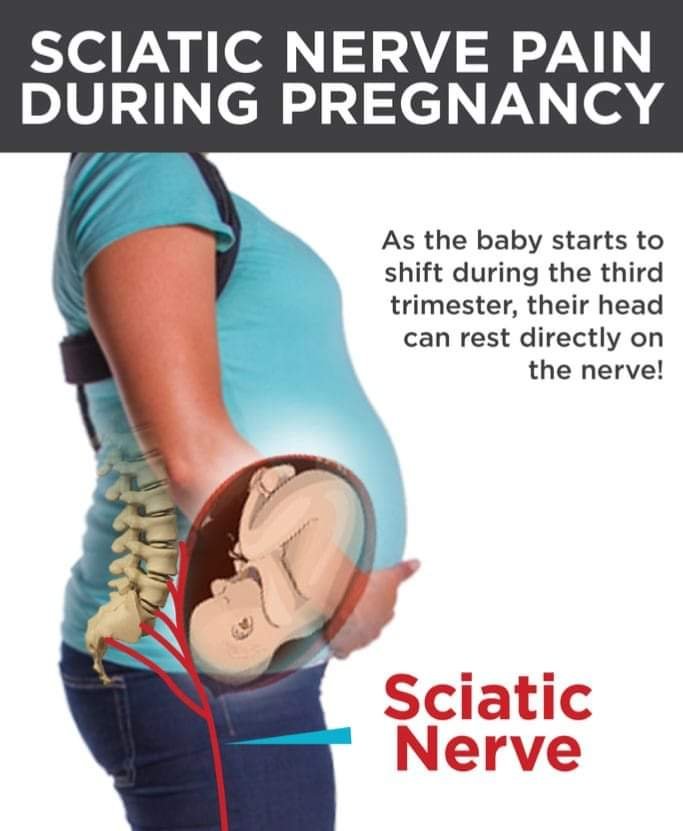
You knew pregnancy was going to mean a lot of firsts — like feeling the incredible first flutter of baby moving in your belly. But back pain that just won’t go away? That might not have been quite the experience you had in mind when you first envisioned yourself with that proverbial pregnancy glow.
While a majority of mothers-to-be experience some dull, throbbing aches in the middle of the back or the butt, they may be having sciatica, a painful but fortunately temporary condition.
Sciatica is a sharp, shooting pain, tingling or numbness that starts in the back or buttocks and radiates all the way down the backs of your legs.
The sciatic nerve, the largest in the body, starts in the lower back, runs down the buttocks and branches down the back of the legs to the ankles and feet. In most cases, sciatica happens when this nerve gets compressed by bulging, slipped or ruptured discs, arthritis, or a narrowing of the spinal cord
What causes Sciatica in pregnancy??
When you’re pregnant, the body releases a hormone called relaxin. It’s designed to relax your ligaments and prepare your pelvis for childbirth. However, loose ligaments and a growing uterus can shift your center of gravity and pinch the sciatic nerve, leading to shooting pains down your legs.
Basic modifications and Treatments to relieve sciatica pain during pregnancy.
- Use a warm compress on the spot where you feel the pain.
- When you can, take a break off of your feet. Resting in a comfortable position can ease some leg and lower back pain.
- Sleep on the side of your body that’s pain-free. For example, if you feel pain on your left side, lie down on your right side. That’s still okay, even though the “best” sleeping position for pregnant women is typically said to be the left side.
- For extra comfort at night, use a firm mattress with plenty of back support. You can also place a pregnancy pillow or a regular pillow between your legs to help keep the pelvis in better alignment and take some pressure off the sciatic nerve.
- Try to avoid sitting for long stretches. Take frequent walking breaks and try alternating between your desk (or the couch) and a Pilates ball.
- Do some pelvic tilts with your Kegel exercises. They’ll help strengthen your core muscles.
- Try swimming. It can take off some of the pressure, since the buoyancy of the water temporarily relieves the spine of the pregnancy weight.
- Consider therapeutic prenatal massage and Customized physical therapy regimens can be helpful too.
- If the pain is severe, talk to us via call/Whatsapp on 0742078333 and we can offer the help that you need.

 Alex Omweri